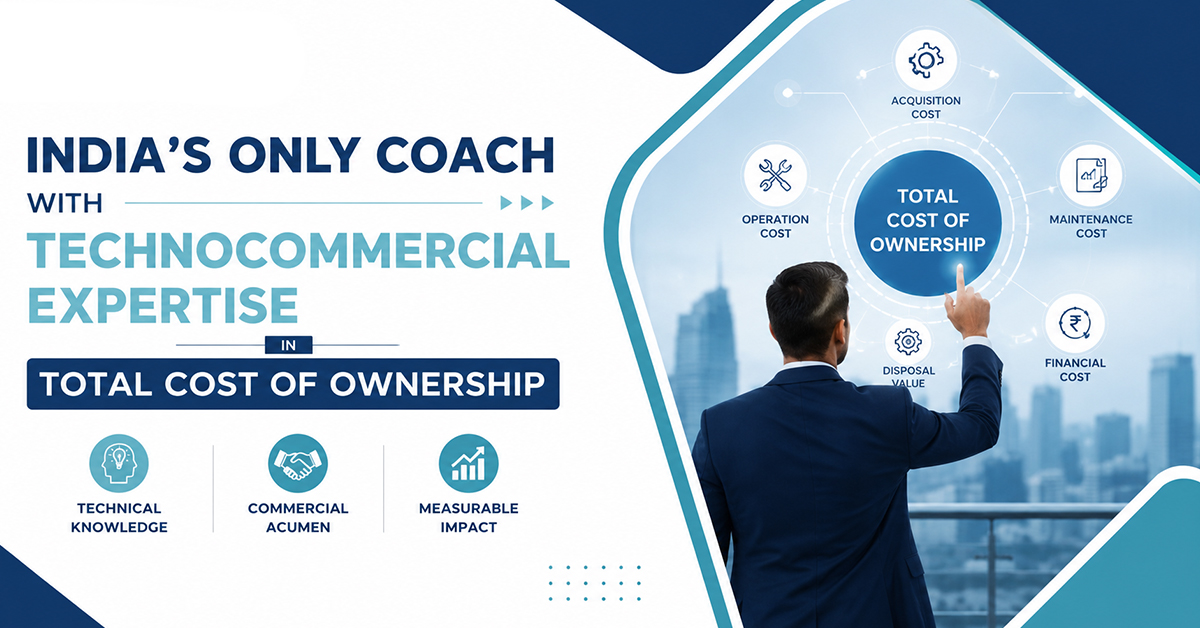
indias only Coach with Technocommercial Expertise in Total cost of Ownership
Vehicle ownership coaching sounds like a fancy term, but if you are stuck between models, dealers, and finance quotes, you already feel the need for

Vehicle ownership coaching sounds like a fancy term, but if you are stuck between models, dealers, and finance quotes, you already feel the need for
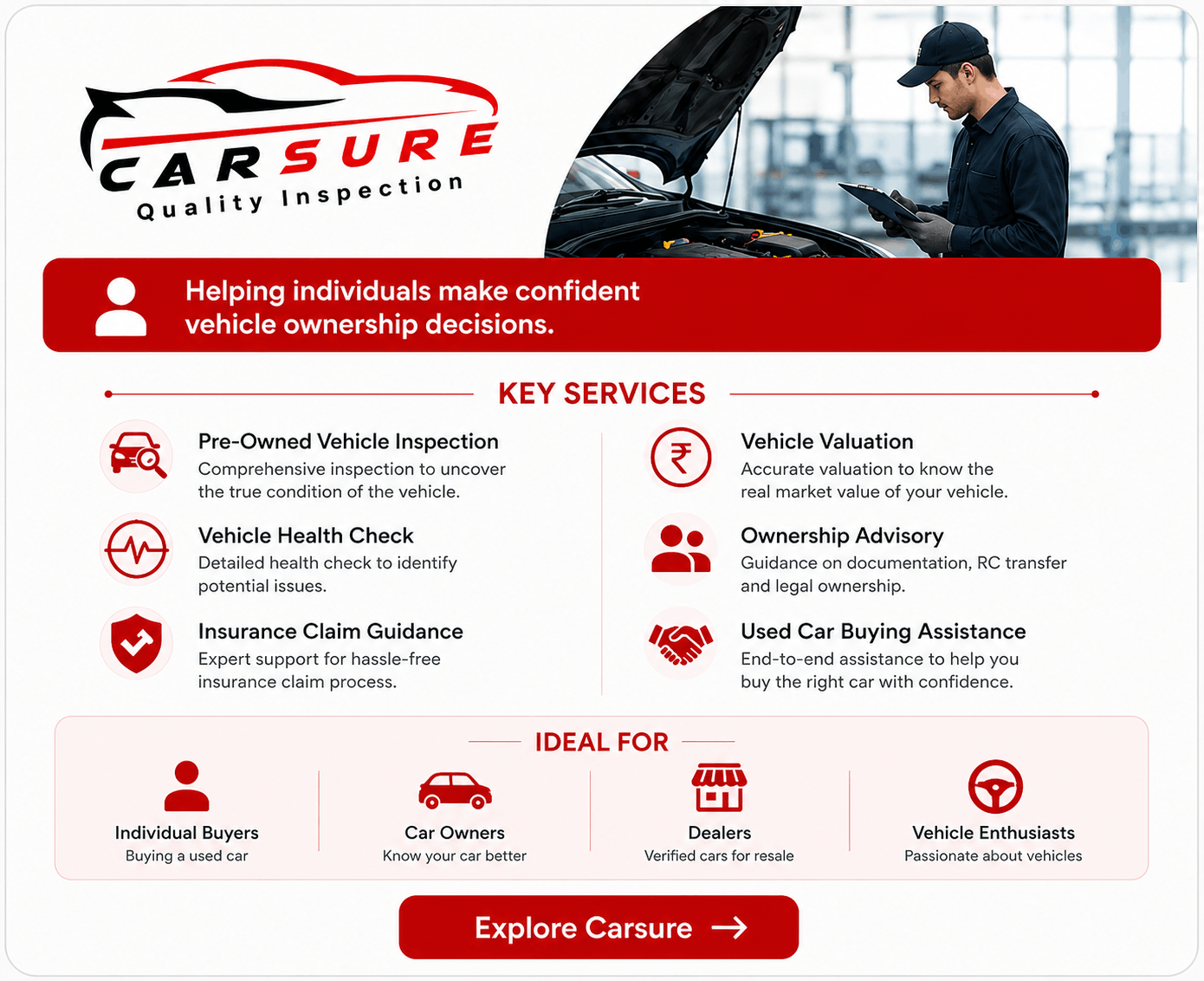
A proper car inspection is the difference between driving home a reliable vehicle and inheriting unexpected repair bills. In the automotive market, it is natural

Insurance surveyor training is under pressure. Loss ratios are tight, customers are impatient, and one weak assessment can wipe out months of careful pricing. The
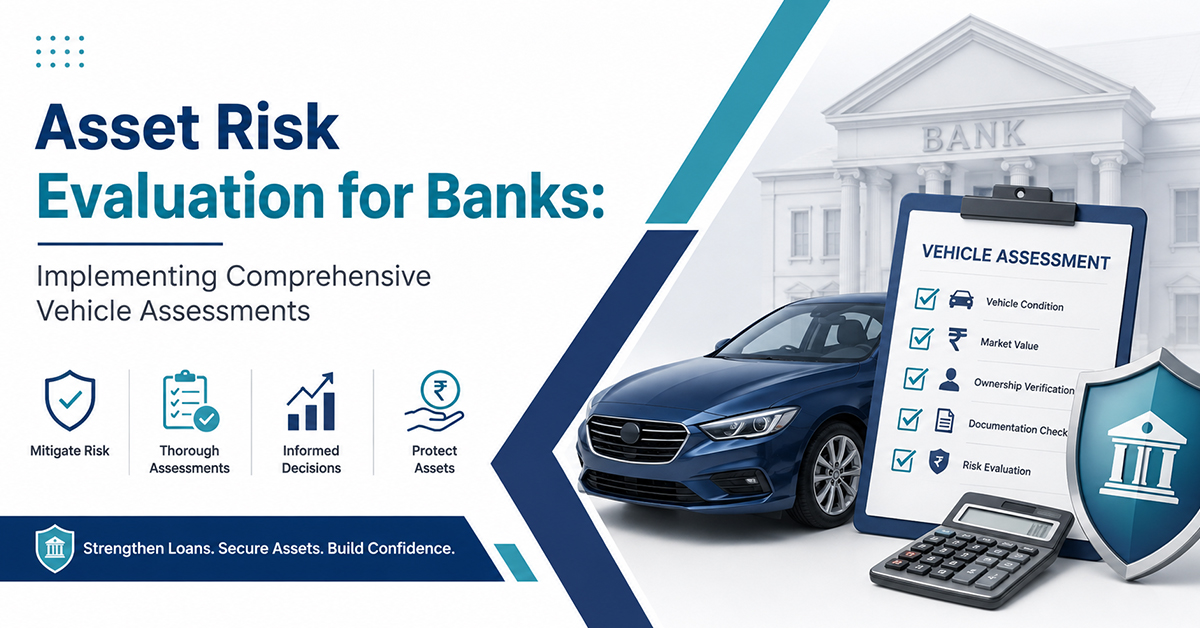
When a loan goes bad on a car or commercial vehicle, the first question is always the same: did we get the vehicle asset valuation

After a major accident, one of the biggest questions is whether the vehicle should be repaired or declared a total loss. Many vehicle owners do not understand how this decision is actually made.
Total loss evaluation involves technical, financial, and insurance considerations.

Buying a used vehicle can be financially smart—but only when the buyer understands what to inspect beyond appearance and price.
Many vehicles look attractive externally while hiding major structural, legal, or mechanical problems.

Many people believe vehicle valuation is simply checking online prices or dealer quotations. In reality, accurate valuation is a technical process that combines engineering understanding, market analysis, condition assessment, and financial logic.
True valuation is a science—not guesswork.

India’s automotive industry is entering a technology-driven transformation. Electric vehicles, connected mobility, AI diagnostics, autonomous features, and digital insurance ecosystems are redefining the future of transportation.
This evolution demands a new generation of automobile expertise.

Motor insurance claims are not just paperwork processes. They involve technical evaluation, liability analysis, repair assessment, policy interpretation, and settlement negotiation.
A lack of technical clarity can lead to disputes, delayed settlements, and financial losses for vehicle owners.

Buying a vehicle in India is often treated as a one-time financial decision. However, true vehicle ownership goes far beyond the purchase. From insurance and maintenance to resale value and legal responsibilities, every stage of ownership requires informed decision-making.
Vehicle ownership intelligence is the ability to understand, evaluate, and manage all aspects of owning a vehicle smartly and responsibly.
After a major accident, one of the biggest questions is whether the vehicle should be repaired or declared a total loss. Many vehicle owners do not understand how this decision is actually made.
Total loss evaluation involves technical, financial, and insurance considerations.
Buying a used vehicle can be financially smart—but only when the buyer understands what to inspect beyond appearance and price.
Many vehicles look attractive externally while hiding major structural, legal, or mechanical problems.
Many people believe vehicle valuation is simply checking online prices or dealer quotations. In reality, accurate valuation is a technical process that combines engineering understanding, market analysis, condition assessment, and financial logic.
True valuation is a science—not guesswork.
India’s automotive industry is entering a technology-driven transformation. Electric vehicles, connected mobility, AI diagnostics, autonomous features, and digital insurance ecosystems are redefining the future of transportation.
This evolution demands a new generation of automobile expertise.
Motor insurance claims are not just paperwork processes. They involve technical evaluation, liability analysis, repair assessment, policy interpretation, and settlement negotiation.
A lack of technical clarity can lead to disputes, delayed settlements, and financial losses for vehicle owners.
Buying a vehicle in India is often treated as a one-time financial decision. However, true vehicle ownership goes far beyond the purchase. From insurance and maintenance to resale value and legal responsibilities, every stage of ownership requires informed decision-making.
Vehicle ownership intelligence is the ability to understand, evaluate, and manage all aspects of owning a vehicle smartly and responsibly.
Motor insurance claims are not just paperwork processes. They involve technical evaluation, liability analysis, repair assessment, policy interpretation, and settlement negotiation.
A lack of technical clarity can lead to disputes, delayed settlements, and financial losses for vehicle owners.
Many people believe vehicle valuation is simply checking online prices or dealer quotations. In reality, accurate valuation is a technical process that combines engineering understanding, market analysis, condition assessment, and financial logic.
True valuation is a science—not guesswork.
Buying a used vehicle can be financially smart—but only when the buyer understands what to inspect beyond appearance and price.
Many vehicles look attractive externally while hiding major structural, legal, or mechanical problems.
India’s automotive industry is entering a technology-driven transformation. Electric vehicles, connected mobility, AI diagnostics, autonomous features, and digital insurance ecosystems are redefining the future of transportation.
This evolution demands a new generation of automobile expertise.
After a major accident, one of the biggest questions is whether the vehicle should be repaired or declared a total loss. Many vehicle owners do not understand how this decision is actually made.
Total loss evaluation involves technical, financial, and insurance considerations.